While it's most important for an employer to provide a safe and healthy
workplace, it's also important to encourage
healthy lifestyles among their
employees. Healthy eating programs can be a great first step. They can bring
lots of people together to learn how to improve their health both at work and at
home. As always, these programs should be part of a complete workplace health
program and should not take resources or attention away from workplace hazards
that may be present.You rush off with no breakfast. By morning tea time you’re
onto your third coffee. Since it’s a tea break you go for a large creamy latté
and a big muffin.
Lunch rolls around and you grab something quickly without thinking. By
afternoon you’re feeling tired and groggy, so you go hit the snack box or
vending machine and gulp down a Red Bull.
Welcome to the busy working lifestyle – where the combination of poor
nutrition and high stress make for a sick and tired person – and most probably
overweight as well.
It's easy to fit healthy eating into your busy lifestyle. These 10
strategies will help you create nutritious, energy-boosting meals in minutes.
For those of you trying to eat healthier, one of the biggest places to slip up
is at work. There's more temptation to eat out, mindlessly eat, or, not eat at
all. To make matters worse, many people never even leave their desks when
lunchtime rolls around. If you're trying to change your eating habits this year,
here are a few tips to ensure that you have a healthy lunch hour.
1. Stock up on healthy staples every week. Whole-grain breads and cereals,
fruits, vegetables, canned beans, low-sodium deli meats, yogurt and low-sodium
soup will make meal preparation a snap.
2. While dinner is cooking, prepare lunch for the next day. Toss in a few
extra handfuls of veggies or an extra chicken breast to use for sandwiches and
salads.
3. At work keep a stash of healthy snack items such as instant oatmeal,
baby carrots, yogurt, low-fat frozen burritos, meal-replacement bars, string
cheese, low-fat popcorn and fruit canned in its own juice.
4. Always add color to your meal by including a fruit or vegetable.
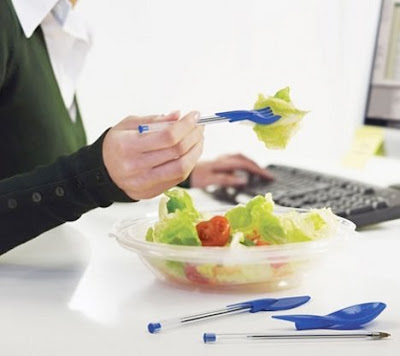
"Eating at your desk encourages mindless eating, and overeating," says
Susan Moores, RD, a spokesperson for the American Dietetic Association. "You're
most likely multitasking and not paying attention to the amount of food you're
eating."
Lunching at your desk also means that instead of sitting in front of a
computer for eight hours a day, you're doing it for nine.
"Eating at your desk also prevents you from getting up and out of your
office," Moores tells WebMD. "You need to get the heart pumping and the blood
flowing again, and lunch is an important time to do that. If you're sitting at
your desk eating, you lose that opportunity."
As if that weren't bad enough, dining at your desk can create a field day
for bacteria.
"If you get called away from your desk, and then you have to put off eating
for an hour or two, and then you pick at your lunch over the day, you need to be
concerned about the temperature of your food and food safety," says Moores.
In other words, your room-temperature chicken salad sandwich that's been
sitting out for three hours can easily become a bacteria feeding ground. But
wait, it gets worse. (You might want to put that sandwich down now.)
"The desk, in terms of bacteria, is 400 times more dirty than your toilet,"
says Charles Gerba, PhD, a professor of environmental microbiology at the
University of Arizona in Tucson. "People turn their desks into bacteria
cafeterias because they eat at them, but they never clean them. The phone is the
dirtiest, the desktop is next, and the mouse and the computer follow."
To give your desktop the dirt test, Gerba says, "turn your keyboard over
and see how many crumbs fall out. The more of a snowstorm, the dirtier your
desk."